What Is a Motorcycle Bill of Sale?
A motorcycle receipt is a lawful file that tapes the sale and transfer of a motorcycle in between a customer and a seller. It details key information like the make, version, year, VIN, and odometer reading, developing a clear record of the deal. Some states need it for registration or title transfers, while others advise it as receipt and ownership.
When to Use a Motorcycle Receipt
A proof of purchase isn’t needed all over, however it’s typically a wise concept. It confirms ownership, safeguards both celebrations, and can save time if questions regarding the bike’s history come up later. It’s specifically vital in situations like:
- Signing up or entitling a motorcycle in states that require it. As an example, Virginia needs it for bikes over 50cc, while Colorado needs a notarized receipt for bonded titles or bikes 25 years or older.
- Private sales, specifically when the dirt bike has been raced, rebuilt, or modified, considering that the document helps tape its background and condition.
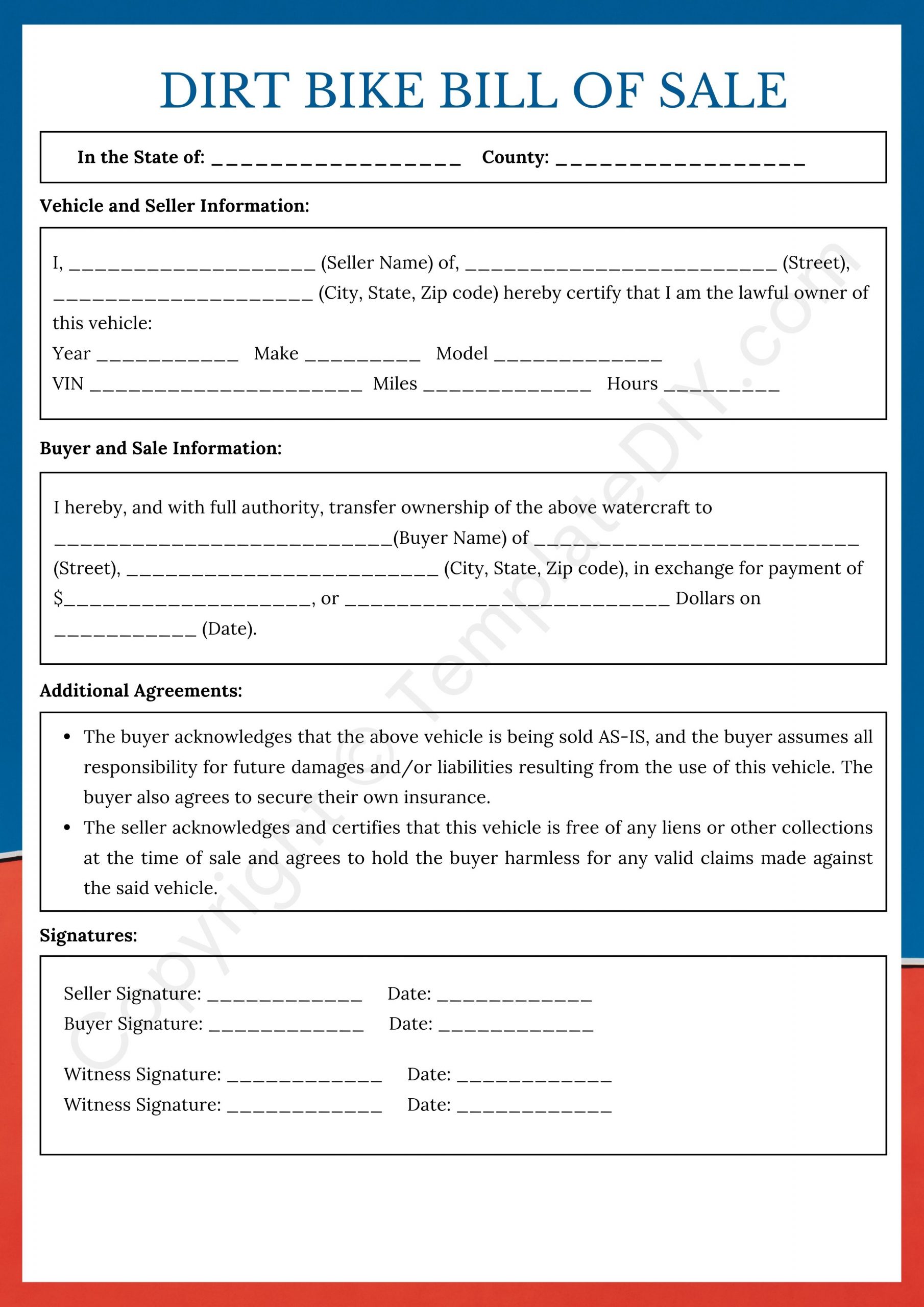
Also when it’s optional, filling out a proof of sale for a dirt bike adds additional security for both sides. Rather than relying on a verbal agreement, a created document validates possession and makes future sales easier.Join Us louisiana bill of sale for a dirt bike website Making use of a motorcycle bill of sale layout walks you via the procedure so your sale is total, exact, and prepared for enrollment.
If your state requires you to title or register a dirt bike, see to it you have the proper records prepared. Together with your motorcycle proof of sale, bring:
- The authorized title from the existing proprietor, if the motorcycle already has one
- The Manufacturer’s Declaration of Beginning (MSO) for brand-new or untitled motorcycle
- Evidence of ID and evidence of residency
- Repayment for registration or title charges
Inspect your state DMV internet site for any added steps. Some may ask for a VIN confirmation or additional documentation if the motorcycle came from out of state.
How to Compose a Receipt for a Motorcycle
Since motorcycle are usually sold privately, a proof of sale aids keep the sale straightforward and clear. To make certain it stands, you’ll need to consist of the proper details in the dirt bike bill of sale. Below’s how to fill it out.
- Videotape the day of sale by composing the day the buyer pays and takes the motorcycle home. That date marks when possession officially transfers.
- Detail the location of the sale by getting in the state where it occurs. This helps identify if the motorcycle requires a title, registration, or off-highway (OHV) sticker label.
- Include the overall sale price in US dollars. If the offer consists of bonus like a stand, ramp, or spare parts, include them in the total amount.
- Specify the repayment approach used for the sale. Numerous motorcycle deals depend on cash money or a cashier’s check, yet money orders or PayPal are sometimes made use of.
- Verify the warranty standing by selecting “No.” Motorcycle are almost always marketed as-is because they’re developed for off-road use and naturally reveal wear.
- Describe the motorcycle in detail by consisting of the make, version, year, VIN or framework number, color, and engine dimension (cc). Mention upgrades such as a brand-new exhaust, suspension arrangement, or plastics package if they’re part of the sale.
- Tape-record the odometer or hour reading, depending on the motorcycle. If there’s no odometer, select “N/A – no odometer” and consist of the hour meter analysis if offered. It reveals true engine time.
- Enter the seller’s details specifically as it shows up on the title or Maker’s Statement of Beginning. This validates who possessed the motorcycle before the sale.
- Add the purchaser’s info, including their complete name and address for registration or recordkeeping.
- Determine whether or not to notarize the receipt based on your state’s rules. Notarization includes an extra layer of evidence, specifically for untitled or older motorcycle.
Once both events indication, the dirt bike proof of purchase ends up being the legal proof of ownership, confirming the bike’s details, the sale date, and who now has it.